 Jane
Jane
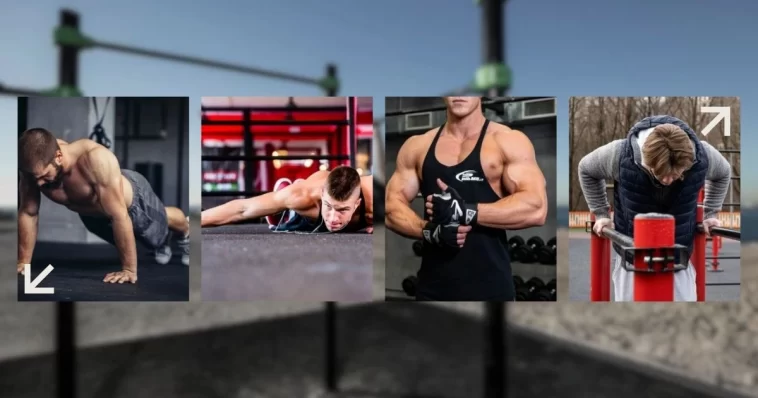
Building a strong, defined chest doesn’t always require a gym membership or heavy iron plates. In the current fitness landscape, more people are turning to bodyweight training for its convenience and the functional strength it develops. Whether the goal is to pack on muscle or simply get moving after a long day at the computer, finding the best calisthenics exercises for the chest can transform a routine from a repetitive chore into a rewarding challenge.
The shift toward bodyweight training is part of a larger movement where people are looking for activities that fit naturally into their daily lives. Short, effective sessions are replacing long, grueling gym visits, and the ability to train anywhere—a park, a living room, or even a hotel room—is a major draw. To help navigate this growing trend, here are the 10 best calisthenics exercises for chest that build serious strength, along with everything needed to start or level up a fitness journey.
10 Best Calisthenics Exercises For Chest
Creating a powerful chest through bodyweight movement involves hitting the muscles from various angles and using different levels of intensity. These ten moves represent the gold standard for building a solid foundation and pushing past plateaus.
1. Standard Push-Ups
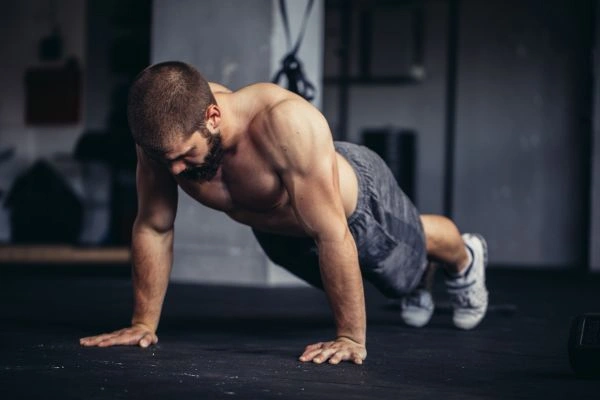
The classic push-up remains the backbone of chest development. It works the entire pectoral region while also engaging the shoulders, triceps, and core. To get the most out of it, focus on a slow descent and a controlled push back up. Keeping the body in a perfectly straight line ensures the chest does the heavy lifting rather than the hips or lower back.
2. Wide-Grip Push-Ups
By placing the hands wider than shoulder-width, the tension shifts more toward the outer fibers of the chest. This is one of the best calisthenics exercises for adding width and creating that broad look. It is important not to go so wide that it causes discomfort in the shoulders; a few inches beyond shoulder-width is usually plenty.
3. Decline Push-Ups
Elevating the feet on a chair, bed, or bench changes the angle of the push, putting more focus on the upper chest. This area is often harder to develop, but decline push-ups mimic the incline bench press perfectly. The higher the feet, the more weight is shifted onto the upper pecs and front shoulders.
4. Diamond Push-Ups
While these are famous for building triceps, they are also incredible for the inner chest. By bringing the hands together so the thumbs and index fingers form a diamond shape, the chest is forced to contract more intensely at the top of the movement. This helps fill in the middle of the chest for a more complete look.
5. Archer Push-Ups
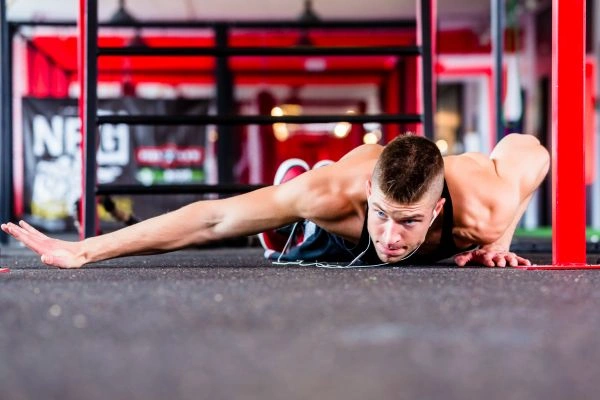
Archer push-ups are a fantastic step toward the one-arm push-up. While lowering the body, one arm stays straight out to the side like an archer holding a bow, while the other arm does most of the pushing. This asymmetrical load is great for fixing strength imbalances and providing a much higher level of resistance than standard variations.
6. Parallel Bar Dips
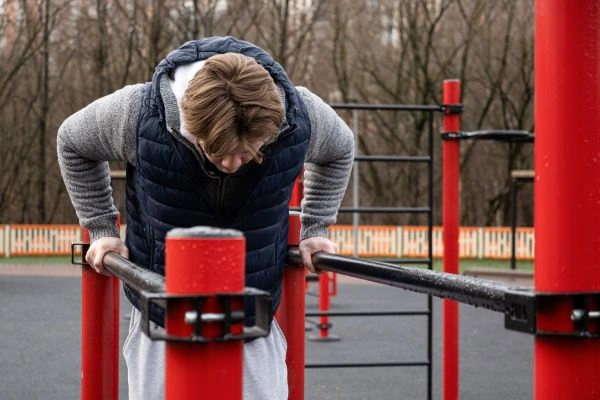
Dips are often called the bodyweight equivalent of the decline bench press. When leaning the torso forward at about 30 degrees, the focus stays squarely on the chest rather than the triceps. This move allows for a deep stretch at the bottom, which is a key trigger for muscle growth.
7. Pseudo Planche Push-Ups
In this variation, the hands are placed further down toward the waist rather than under the shoulders. By leaning forward, the leverage changes, making the exercise much harder. It puts an intense load on the upper chest and shoulders, building the kind of raw strength needed for advanced skills.
8. Explosive Clap Push-Ups
Adding power to a routine is essential for overall athleticism. Explosive push-ups require pushing off the ground with enough force to clap the hands before landing. This trains the fast-twitch muscle fibers, which are the ones with the most potential for growth and power.
9. Ring Push-Ups
Using gymnastics rings or suspension trainers introduces instability. The chest muscles have to work extra hard just to keep the arms from splaying out. This “fighting the shake” recruits more muscle fibers and builds incredible stabilizer strength that fixed bars simply can’t match.
10. Isometric Chest Squeezes
Often overlooked, isometrics involve holding a muscle contraction without moving. Pressing the palms together as hard as possible in front of the chest for 20 seconds can be a great way to finish a workout. It creates a deep mind-muscle connection and helps with muscle density and definition.
Calisthenics Exercises For Beginners
Starting a fitness journey can feel overwhelming, but the beauty of bodyweight training is that every move can be scaled to match any current ability level. The goal for a beginner is to build a solid foundation of movement and joint health.
Building The Basics
Before jumping into the more intense moves, it is vital to master the “knee push-up” or the “incline push-up” (where hands are on a raised surface like a table). These versions reduce the amount of body weight being lifted, allowing for a focus on perfect form. A typical beginner session might involve three sets of 10 to 12 repetitions of these easier variations.
Core Stability
A strong chest needs a stable base. Planks and side planks are essential calisthenics exercises for beginners because they teach the body how to stay rigid. Without a strong core, the hips will sag during push-ups, which takes the focus off the chest and can lead to back pain.
Joint Preparation
Wrist and shoulder mobility are often the limiting factors for newcomers. Spending five minutes on circles and light stretches before a workout prepares the joints for the stress of supporting body weight. This simple habit keeps the progress consistent and prevents minor aches from becoming long-term issues.
Advanced Calisthenics Exercises
For those who find standard push-ups too easy, the world of advanced bodyweight training offers almost infinite challenges. Moving toward high-tension reps and leverage-based movements is the secret to continued growth.
Mastering Leverage
As strength increases, the focus shifts from doing more reps to doing harder reps. The “One-Arm Push-Up” is a classic goal for many. It requires not just chest strength, but incredible core tension to keep the body from rotating. Another step up is the “Planche Lean,” where the body is held in a push-up position but leaned so far forward that the feet almost lift off the ground.
Explosive Movements and Skill Work
Beyond the standard clap, advanced calisthenics exercises might include “Superman Push-Ups,” where the entire body leaves the ground, and the arms reach forward. There is also the “Muscle-Up,” which combines a pull-up with a dip in one explosive motion. These skills require a high level of coordination and “signal quality” between the brain and the muscles.
Increasing The Range Of Motion
Deepening the stretch can spark new muscle growth. “Deficit Push-Ups,” where the hands are placed on blocks or parallettes, allow the chest to sink lower than it would on a flat floor. This extra range of motion puts more stress on the muscle fibers under a deep stretch, which is one of the most effective ways to build size.
How To Structure A Chest Workout
Knowing the exercises matters, but knowing how to sequence them completes the workout. A balanced routine should hit all parts of the chest and include enough rest for recovery.
Frequency and Volume
Current research suggests that training a muscle group twice a week is the sweet spot for most people. This allows enough time for the muscles to repair while keeping the stimulus frequent enough to trigger growth. Aiming for 10 to 20 total sets per week for the chest is a solid target for those looking to see real changes.
The Importance of Tempo
Instead of rushing through reps, slowing down can make a world of difference. Following a ‘3-1-3’ tempo slows each rep, increasing the muscle’s time under tension for better results. This makes even simple exercises feel much harder and more effective.
Progressive Overload
To keep getting stronger, the workouts must get harder over time. This doesn’t always require doing more reps. Progress can be made by:
- Moving to a harder variation (e.g., from regular to archer push-ups).
- Decreasing the rest time between sets.
- Improving the range of motion.
- Adding a short pause at the most difficult part of the move.
Recovery And Longevity In Training
The year 2026 has seen a massive shift in how we view recovery. It is no longer seen as “time off” but as a vital part of the training process itself. Without proper rest, the body cannot repair the micro-tears in the muscle fibers that lead to growth.
Smart Recovery Tools
Many people are now using wearable tech to track their heart rate variability (HRV) and sleep quality. If a device shows a low recovery score, it might be a sign to do a lighter mobility session rather than a heavy chest workout. This data-driven approach helps prevent overtraining and keeps people consistent for years rather than weeks.
Nutrition and Hydration
Fueling the body is just as important as the workout. Muscles need protein to repair and carbohydrates to provide the energy for intense sessions. Drinking enough water and getting quality sleep are the most basic, yet most effective, recovery tools available.
Listen To The Body
Perhaps the most important skill is learning to listen to the signals the body sends. A bit of muscle soreness is normal, but sharp pain in the shoulders or elbows is a sign to stop and reassess. Calisthenics is a marathon, not a sprint, and staying injury-free is the quickest way to reach long-term goals.
Mastering Your Physique With The Best Calisthenics Exercises
Calisthenics is more than just a way to build a bigger chest; it is a way to master the body. By starting with the fundamentals and gradually moving toward more challenging variations, anyone can build a physique that is as functional as it is aesthetic. The flexibility to train anywhere makes it one of the most sustainable ways to stay fit in our busy world.
Whether the focus is on mastering the best calisthenics exercises for the chest or exploring the wide variety of best calisthenics exercises for the whole body, the journey is about consistent, small improvements. Every rep counts, and every session brings a little more strength and confidence.